Eden Simmons · 6 October 2026
Canora's School Gains Spur Coordinated Push for Smarter Commuter Routes and Youth Conservation Grants
Canora's recent academic improvements have prompted local authorities and community groups to coordinate efforts around smarter commuter routes and youth conservation grants, with planning sessions scheduled to ramp up in October 2026. Data from the Canora School District shows a 12 percent rise in standardized test scores over the past three years, a trend that observers link to increased student participation in after-school programs and better access to educational resources. Those gains, according to district reports, have highlighted the need for infrastructure that supports daily travel between homes, schools, and conservation sites where young people can apply classroom knowledge outdoors.
Academic Progress Drives Infrastructure Discussions
School administrators note that enrollment in advanced science and environmental studies classes has climbed steadily since 2023, creating demand for reliable paths that let students reach both classrooms and nearby green spaces without relying solely on buses or private vehicles. City planners have responded by mapping potential upgrades to existing bike lanes and pedestrian corridors, drawing on traffic volume statistics collected by the regional transportation office. These maps indicate that peak student commuting hours overlap with broader community rush periods, which prompts proposals for timed signals and dedicated lanes that separate foot and bike traffic from heavier vehicles.
Researchers at the University of Saskatchewan's transport studies unit have examined similar patterns in comparable prairie towns adn found that targeted route improvements can reduce average commute times by up to 18 minutes for secondary students. Their analysis, published in the Canadian Journal of Urban Planning, also connects shorter travel durations with higher attendance rates in extracurricular conservation clubs. Local officials cite these findings while preparing grant applications that bundle route enhancements with educational components.
Youth Conservation Grants Take Shape
Alongside route planning, a coalition of municipal leaders and environmental organizations has begun outlining grant programs aimed at students aged 12 to 18 who want to participate in habitat restoration and trail maintenance projects. The proposed funding would cover equipment, transportation stipends, adn mentorship pairings with certified ecologists. Figures from the provincial environment ministry reveal that similar youth programs in neighboring districts have engaged more than 2,400 participants since 2024, resulting in 340 hectares of restored wetland and riparian zones.
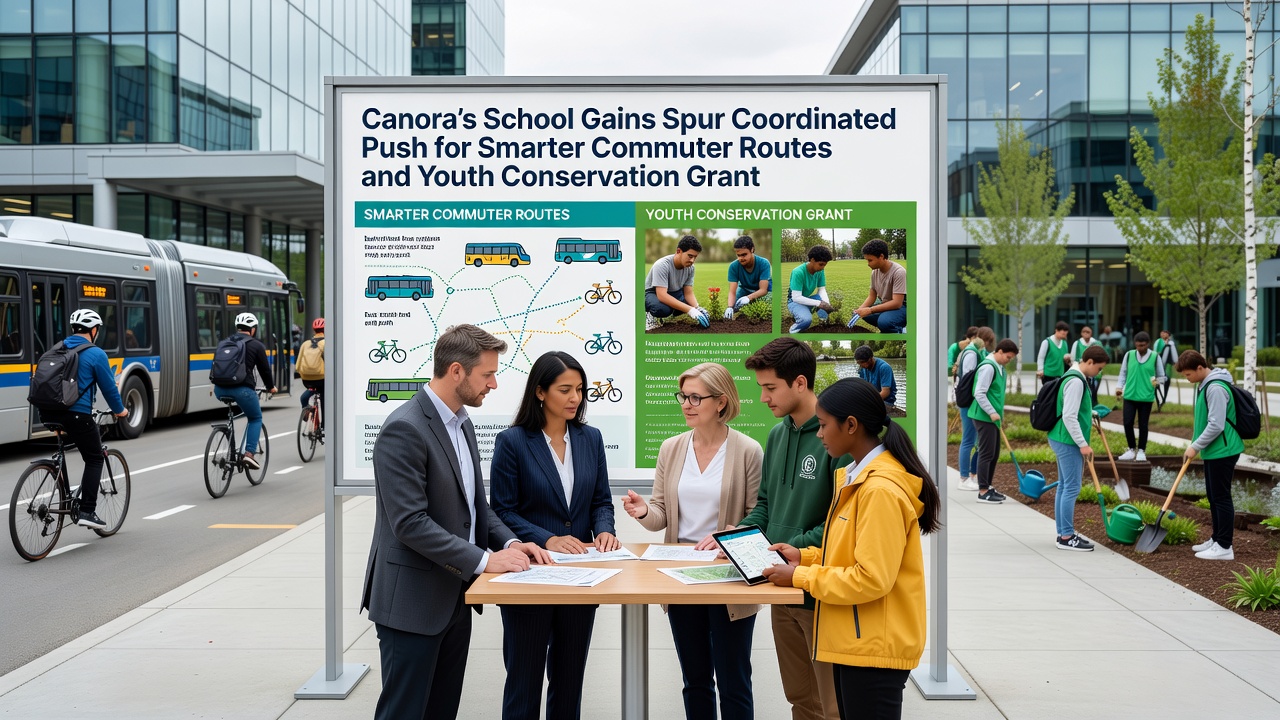
Grant administrators plan to tie award criteria directly to the academic gains already recorded, requiring applicants to maintain a minimum grade point average and submit project proposals that reference concepts learned in school biology or geography courses. This linkage, according to program drafts, aims to reinforce classroom content through hands-on fieldwork. Sessions scheduled for October 2026 will finalize eligibility rules and disbursement timelines, with input from student councils and parent-teacher associations.
Integrated Planning Across Departments
Coordinated meetings between the school board, public works department, and conservation authority have produced preliminary cost estimates that combine road resurfacing with interpretive signage along new routes. These signs would point students toward restoration sites where grant-funded work occurs. Budget documents show that 40 percent of the projected expenses could be offset by matching funds from federal infrastructure programs focused on active transportation. Planners also reference data from Australia's Department of Infrastructure, Transport, Regional Development, Communications and the Arts, which documented similar cost-sharing successes in regional school districts.
Stakeholders emphasize that route design must accommodate seasonal weather variations common to the area, including spring runoff and winter snow accumulation. Engineering teams have therefore incorporated permeable surfaces and heated pavement sections at key intersections, features that reduce maintenance calls and keep pathways usable year-round. Such details appear in draft specifications now circulating among contractors.
Community Input Shapes Final Proposals
Public forums held earlier this year gathered feedback from families who described current walking and cycling conditions as inconsistent, with some segments lacking lighting or clear markings. Those comments have led to additions such as solar-powered path lights and reflective markers spaced at regular intervals. Conservation groups have added their own requirements, insisting that any new trail segments avoid sensitive nesting areas identified during annual wildlife surveys.
October 2026 meetings will review revised drawings and allocate portions of the youth grants to pilot projects on two specific corridors. Organizers expect to announce selected student teams shortly afterward, allowing fieldwork to begin before winter conditions set in. Progress reports will track both route usage statistics and the number of conservation hours logged by grant recipients.
Conclusion
Canora's combination of measurable school improvements and targeted infrastructure investments illustrates how educational outcomes can influence broader municipal planning. The upcoming October 2026 milestones will determine whether the coordinated approach yields measurable increases in both student mobility and environmental project participation, providing data that other communities may reference when pursuing similar linkages between academics and active transportation.